
The short answer. Mold is usually covered only when it results from a covered, sudden water loss, such as a pipe that bursts or a storm that opens the roof. Slow leaks, long-term humidity and poor upkeep usually are not. Flood from a creek or river needs a separate flood policy. Every policy differs, so read yours and call your agent. Tulsa Mold Remediation Pros is a free quote service, not an insurance company or adjuster.
Tulsa, Oklahoma gives insurers plenty of water to argue about. Tulsa International Airport averages about 41 inches of rain a year (NOAA 1991–2020), and recent years ran far wetter: about 54.5 inches fell in 2025, roughly a third above normal, and April 2025 was Tulsa's wettest April on record at 10.99 inches. Add hail, windstorms and the occasional hard freeze, and mold claims here usually start with a specific storm or pipe.
When does homeowners insurance usually cover mold?
Most standard policies treat mold as a result, not a cause. If the water that fed the mold came from a covered, sudden event, the mold cleanup may be part of that claim. If the water crept in over weeks or months, insurers often deny it as wear, maintenance or long-term seepage. Some policies also limit mold coverage to a set dollar amount through an endorsement, so check the declarations page and any mold wording.
| Water source | How claims often go | What to do |
|---|---|---|
| Burst pipe after a hard freeze (like February 2021, when Tulsa hit -13 F) | Often treated as sudden; mold that follows may be included | Shut off water, photograph, report quickly |
| Hail or wind opens the roof | The roof claim comes first; interior water damage may follow it | Tarp or cover the opening, document the attic |
| Slow drip under a sink or behind a shower | Often denied as long-term leakage | Fix the leak; get a remediation quote anyway |
| AC drain pan overflow | Depends on the policy and how long it ran | Ask your agent; keep the HVAC repair invoice |
| River or creek flood (like 1984, 1986 or 2019) | Not covered by homeowners; needs a flood policy | File under the flood policy if you have one |
| Ongoing humidity or condensation | Usually treated as maintenance | Fix the moisture; budget for cleanup |
This table describes common patterns, not your policy. Only your insurer decides coverage.
Flood is a separate policy
Standard homeowners policies exclude flood. In Tulsa, flood means real history: the 1984 Memorial Day flood along Mingo and Cherry creeks killed 14 people, the 1986 Keystone release flooded west Tulsa and Sand Springs, and the May–June 2019 Arkansas River flood tested the levees and swamped homes near Sand Springs and Jenks. If water came in from outside at ground level, expect the claim to go to a flood policy.
Two points matter for Tulsa owners. First, the City of Tulsa is a FEMA Community Rating System Class 1 community, which gives National Flood Insurance Program policies inside city limits a 45% discount. Second, NFIP policies generally have a 30-day waiting period before coverage starts, so buying one after a storm is in the forecast is usually too late. Ask your agent about flood coverage before spring.
What to do right after water damage
Stop the water
Shut off the main valve, cover a roof opening, or clear an AC drain. The Oklahoma Insurance Department tells policyholders to make the repairs needed to prevent further damage.
Document everything
Take photos and video of the water, stains, wet materials and any visible mold before anything is moved. The Department also advises: don't throw anything away unless your insurance company tells you to.
Call your insurer or agent
Report the loss promptly and write down the claim number, the adjuster's name and each conversation.
Start drying
The EPA says to dry water-damaged areas within 24 to 48 hours to prevent mold growth. Run the AC or a dehumidifier and keep receipts.
Hold off on permanent repairs
Wait for the insurer to inspect before rebuilding. Replacement cost policies may require work to be completed within six months of the loss to release withheld payments, so ask about your deadline.
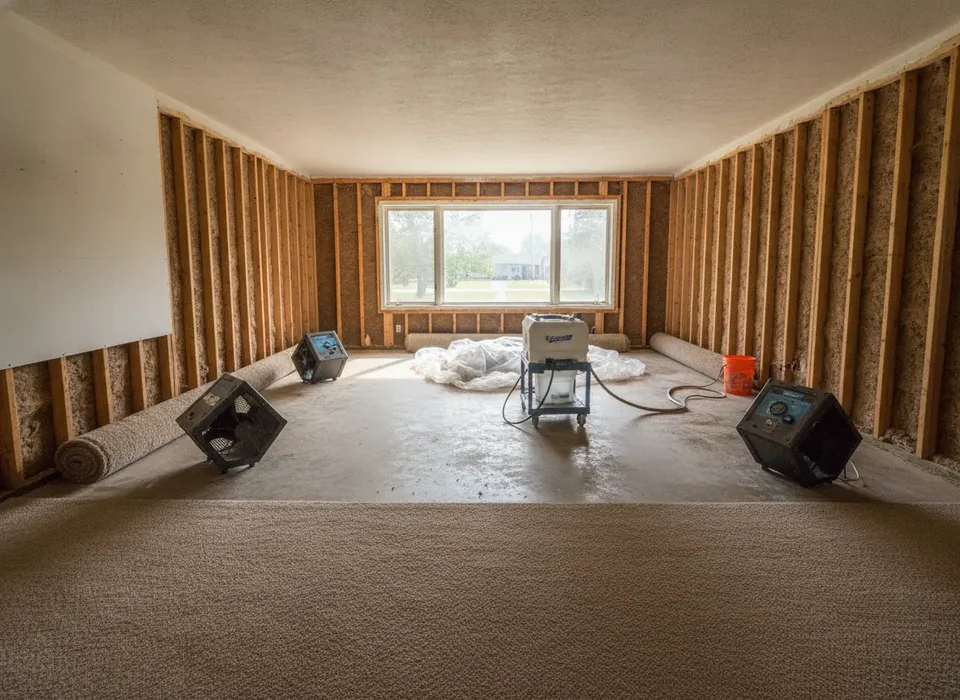
How to support a mold-related claim
Adjusters want to know when the water started and how far it went. Helpful records include:
- The date of the storm, freeze or pipe failure, plus any plumber's or roofer's invoice that names the cause.
- A written scope and quote from a remediation company that lists the affected area, containment and materials to remove.
- Moisture readings or an independent mold inspection report when the mold is hidden or the extent is disputed.
- Post-remediation clearance results, which also help later if you sell the home.
For context on the numbers, published ranges put a typical remediation job at $1,200–$3,750, a broader range at $1,500–$9,000, attic jobs at $1,500–$9,000 and HVAC or duct work at $3,000–$10,000 (This Old House 2026; Fixr 2025). These are published estimates, not quotes. The Tulsa mold remediation cost guide breaks them down further.
Contractors, deductibles and claim denials
After hail or a windstorm, some contractors offer to "take care of" your deductible. In Oklahoma, a roofing contractor paid from insurance may not promise to pay or rebate all or part of your deductible (59 O.S. §1151.30), and the Insurance Department calls such offers a warning sign. Be cautious with any contractor who makes that offer.
If you sign a contract with a residential contractor to be paid from insurance proceeds, Oklahoma law generally lets you cancel within 72 hours after you receive written notice that the insurer denied all or part of the claim (59 O.S. §1151.21). Read the cancellation notice in your contract. Our guide to hiring a mold remediation company in Oklahoma covers this in more detail.
If the claim is denied
Ask the insurer to explain the denial in writing and point to the policy language it relied on. Compare it with your records of when the water started. Many owners still go ahead with remediation on their own budget, because mold left in place keeps spreading while a dispute runs. For questions about how a claim was handled, the Oklahoma Insurance Department has a consumer assistance line listed on its website.
Whatever the outcome, the house still needs the moisture fixed and the damaged materials removed. See water damage and flood mold in Tulsa and attic and roof-leak mold for what those jobs involve.
Frequently asked questions
Does homeowners insurance cover mold in Oklahoma?
Usually only when the mold results from a covered, sudden loss, such as a burst pipe or storm damage that opens the roof. Mold from slow leaks, long-term humidity or poor upkeep is often excluded, and flood needs a separate policy. Policies differ, so read your declarations page and ask your agent.
Does flood insurance cover mold after a flood in Tulsa?
Mold after a river or creek flood is a flood-policy question, not a homeowners one, because homeowners policies exclude flood. What a flood policy pays depends on its terms, so document the damage and start drying right away. Tulsa's FEMA Community Rating System Class 1 rating gives NFIP policies inside city limits a 45% discount. Ask your agent about the details.
Is mold from a hail-damaged roof covered?
The roof damage is usually handled as a wind or hail claim, and interior water damage from that opening may be part of it. Mold that grew long after the storm, or from a leak left unrepaired, may not be. Report storm damage promptly, cover the opening, and photograph the attic and ceilings.
Can a contractor pay my insurance deductible in Oklahoma?
A roofing contractor paid from insurance may not promise to pay or rebate all or part of your deductible under 59 O.S. §1151.30. The Oklahoma Insurance Department lists deductible-waiver offers as a warning sign. If any contractor makes that offer, be cautious and consider reporting it to the Oklahoma Attorney General.
Get free quotes for the cleanup
Whether or not insurance pays, you need a written scope and price. Describe the water source, the rooms affected and whether a claim is open, and independent companies across Tulsa and Green Country can reply with quotes you can share with your adjuster. Request a free quote or call (918) 478-8410. Tulsa Mold Remediation Pros is a free quote service, not an insurer, adjuster or mold company, and nothing here is insurance or legal advice.